Small World Information Bubbles
Information Bubbles
We all live in an information bubble. Not because we are unaware of alternative perspectives, but because we prefer the perspectives of our “tribe” (or in-group).
Fox News, CNN, and MSNBC are filling the trust hole left by eroding community life. Increasingly, extremist online media groups and politicized TV networks are exploiting the vacuum left by abolishing the fairness doctrine. There is no requirement for media sources to be balanced or objective in their presentation of news or facts [1].
In the 1970s, 80s, and 90s research demonstrated that people only read newspapers that aligned with their political point-of-view (Knobloch-Westerwick et al, 2019). Now people seek out media, TV, and online news sources that align with their existing perspective – or are served with reinforcing points of view via social media filtering mechanisms.
A filter bubble is the state of intellectual isolation that arises when personalized searches, recommendation systems, and algorithmic curation selectively presents information to each individual user (Pariser, 2011).
Elfreda Chatman’s “Small World” Findings
Elfreda Chatman (1991) showed how people in working class and marginalized communities prefer news from friends & neighbors to external sources. She described the world that less-educated or impoverished individuals inhabit, using six aspects of information-seeking. Chatman argues that poor and less-educated individuals tend to:
1. Live life in a small world
Information originating outside of their local circle of contacts holds little of interest for the lower class. Their information access is driven by the combination of living in a risky environment, life at the margin of influence and social participation, and “the awareness that if one wants acceptance, future goals and aspirations must be constrained by the standards of one’s family and friends.”
2. Have lower expectations of success
People in marginalized and poorer communities believe their success is governed by luck rather than opportunity or skill.
3. Seek information only from direct or trusted contacts
People (generally) prefer to seek information mainly from others like themselves, and are skeptical of claims not personally experienced. They view external perceptions about reality as not adequate, trustworthy, or reliable, which limits exposure to new possibilities or education.
4. Have a limited-time horizon
Their lifestyle is present rather than future focused. They base decisions on “the immediate present and the very recent past” rather than planning for the future.
5. Have an insider’s worldview
People in marginalized and poorer communities view the outside world as unpredictable and hostile. There is an “us vs. them” mentality, where people residing outside of one’s familiar surroundings are viewed with suspicion.
6. Use the mass media differently than do higher socioeconomic classes.
Marginalized people are heavy television viewers: “mass media, particularly television, is viewed as a medium of escape, stimulation, and fantasy” rather than an information source. They perceive news to be a reflection of events that occur locally and so they are more likely to be “mistrustful of others and afraid of being victims of crime.” They keep dogs and guns for protection.
Chatman’s (1991) Small World theory has proved highly influential, as shown in Figure 1. This theory has been used to demonstrate how – because evaluating information in an online world is so complex – people tend to rely on members of their local community, or online influencers trusted by local community members, as sources of reliable information (Chowdhury & Chowdhury, 2013).
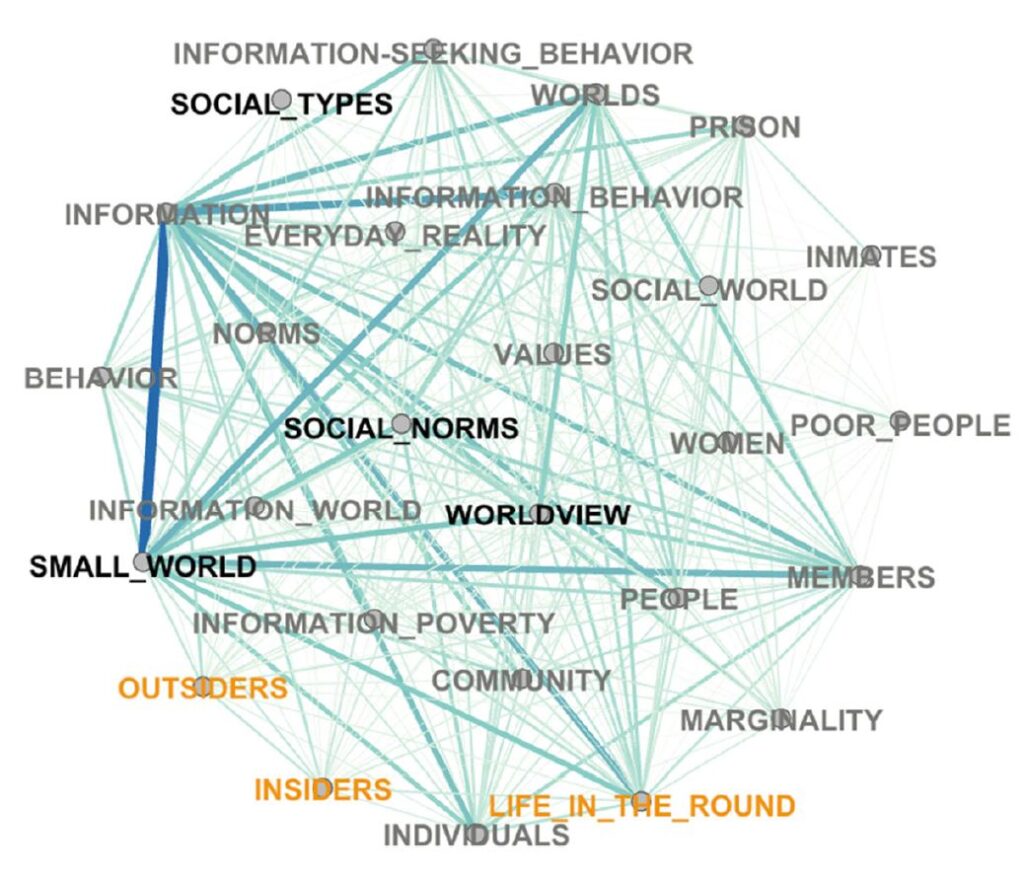
Figure 2. Influence of Chatman’s “Small World” Information Theory
(Gonza´lez-Teruel & Abad-Garcı´a, 2018)
Chatman’s “small world” theory explains why Fox News is so subversive to society: it markets itself as the sole purveyor of truth and plays on distrust of people outside the group by pretending that their privileged journalists are just like “ordinary people.” Members of marginalized and poorer communities consume news as a medium of entertainment – they are relatively uneducated and can be indoctrinated without realizing it, as this Fox News presents perspectives from “people like us.” When trying to get a broadcast license in the UK, from where they were banned, Fox News described their content as entertainment, rather than news.
Filter Bubbles in Online Communities
Because social media and news media are driven by algorithm or network-connected interaction, they create a “small world” network for everyone, regardless of social class. On social media platforms, algorithms and the need to develop networks of regular social contacts can inadvertently isolate a user into an ideological filter bubble (Pariser, 2011), by only serving them information that it thinks they want to see. For example, Meta (Facebook, Instagram, and Threads) curate their posts to match them to posts on similar topics, or containing similar keywords and sentiment-related modifiers that users have sought out previously [2]. If you “like” posts from a particular perspective, those are all that you will see. Two examples of filtering mechanisms are:
- On Threads, a Meta social media site which uses a preference-oriented algorithm to display posts for each user, there has been a lot of discussion about how the algorithm rewards people who “like” posts to sympathize with those whose dog or cat has just died, with a depressing, never-ending stream of posts about dead or dying pets.
- On platforms with no filtering algorithm, such as Bluesky, the need to follow other users in order to obtain visibility and online-interaction imposes its own filter bubble, as people tend to follow those with similar perspectives to their own (people whose posts they enjoy reading).
This creates an online small-world – an automated filter-bubble. Because of their limited, ideological information preferences, it is difficult to introduce people to alternative points of view. They see alternative ideological viewpoints – including factual support for counter-perspectives – as dishonest or subversive. When confronted by cognitive dissonance, they reframe the “facts” to fit with their beliefs, because of the importance of local community perspectives in their world. They engage in defense mechanisms such as avoidance, denial, or cherry-picking sources. Dissonance research has demonstrated that people are more willing to examine materials that confirm their beliefs than materials that dispute their beliefs. reinforcing their filter-bubble (and confirming research from previous decades). People become isolated in a filter-bubble of limited information sources, of which they are largely unaware.

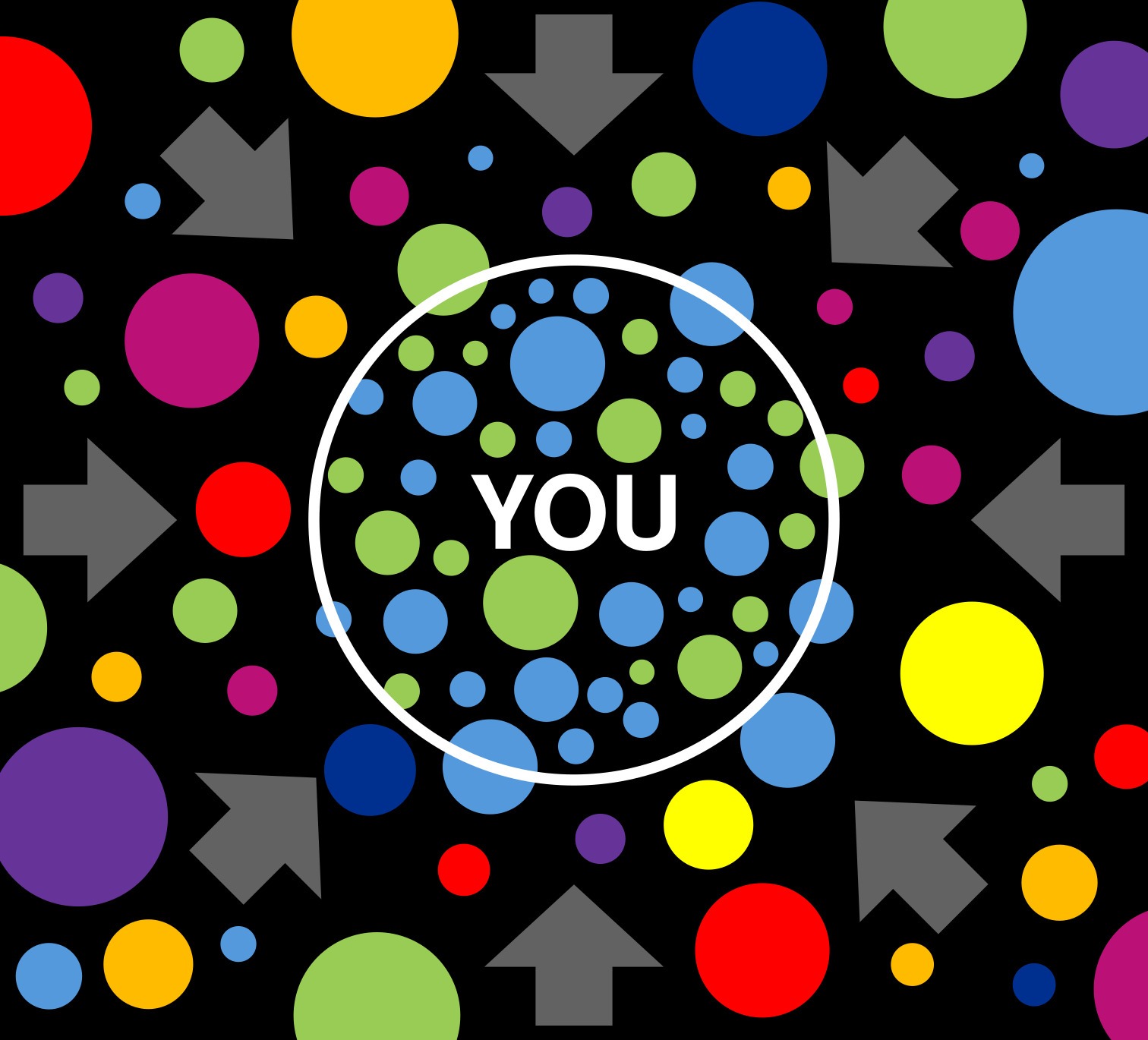
Figure 2. In an ideological filter bubble, indicated by the circle, exchange of information is closed, limited to a prescribed network of influences, and insulated from rebuttal (Wikipedia)
Social media algorithms and network-association mechanisms (such as following people whose posts you prefer) can inadvertently isolate a user into an ideological filter bubble, by only serving them information that it thinks they want to see. It is important to actively seek out diverse sources of information and – when countering disinformation in a community – to introduce countervailing information (such as data on the efficacy of vaccination) via trusted community influencers, rather than presenting people with external, unvouched for scientific evidence.
Notes
[1] Kellyanne Conway, a public relations and media influencer working for Donald Trump, famously coined the phrase “alternative facts” to reflect ideological perspectives for which there was no objective evidence.
https://en.wikipedia.org/wiki/Alternative_facts
[2] An example of sentiment-analysis is associating a modifier such as “demented” with a keyword such as “president.” Posts containing both terms will be ranked as more attractive to the user than posts without them, if the user has “liked” posts with similar sentiment-terms previously.
Reference
Chatman, E. A. (1991). Life in a small world: Applicability of gratification theory to information-seeking behavior. Journal of the American Society for Information Science, 42, 438–449.
https://doi.org/10.1002/(SICI)1097-4571(199107)42:6<438::AID-ASI6>3.0.CO;2-B
Chowdhury, G. G., & Chowdhury, S. (2013). Human information behaviour studies and models. In Information Users and Usability in the Digital Age (pp. 55–84). Facet Publishing.
https://doi.org/10.29085/9781856049757.004
Gonza´lez-Teruel & Abad-Garcı´a (2018) The influence of Elfreda Chatman’s theories: a citation context analysisScientometrics (2018) 117:1793-1819
https://doi.org/10.1007/s11192-018-2915-3
Harmon-Jones, E., & Harmon-Jones, C. (2007). Cognitive dissonance theory after 50 years of development. Zeitschrift für Sozialpsychologie, 38(1), 7-16. Downloaded 5/12/2026 from
https://www.researchgate.net/profile/Eddie-Harmon-Jones/publication/255581596_Cognitive_Dissonance_Theory_After_50_Years_of_Development/links/638e8e53484e65005be6c4a8/Cognitive-Dissonance-Theory-After-50-Years-of-Development.pdf
Knobloch-Westerwick, S., Westerwick, A., & Sude, D. J. (2019). Media choice and selective exposure. In Media effects (pp. 146-162). Routledge. Downloaded 5/12/2026 from
https://kimliaa.wordpress.com/wp-content/uploads/2021/10/routledge_communication_series_mary_beth_oliver_arthur_a._raney_jennings_bryant_-_media_effects__adv.pdf#page=157
Pariser, E. (2011). The filter bubble: How the new personalized web is changing what we read and how we think. Penguin.
Wikipedia (2015) Filter bubble. Accessed 5/12/2026 at https://en.wikipedia.org/wiki/Filter_bubble. Graphic source Original: Evbestie Vector: Dabmasterars, CC BY-SA 4.0 https://creativecommons.org/licenses/by-sa/4.0, via Wikimedia Commons